Wednesday, October 11, 2017

If You’ve Played This Video Game, Read That Book (Horror Edition!)


In my post Are Horror Books Actually Scary? I explained how it is that movies have the potential to be scarier than books.

Of all forms of media, though, nothing beats video games when it comes to scares.

Sure, movies have all the same sights and sounds of video games (and, of course, often appear more realistic than games), but there's still an element missing in movies:

You sit in the theatre and watch a story unfold in front of you. Will the hero survive/escape/beat the bad guy/save the day? - sit there long enough, and you'll find out.

In a video game, though, you can't just sit there and find out.

It's up to you if the horror is overcome.

You're the one who must defeat the monster, solve the puzzles, escape the maze. Are you keeping an eye on your character's health? Your ammo? Can you solve this riddle? Run fast enough? Set up the traps in time? Find a place to hide?

Movies and books can't even come close to that sort of tension.

That said, if, like me, you enjoy games, I want to join the worlds of video games and literature for you:

So if you've played This game, read That book.


(Alphabetical by video game title)


if you've played Alice Madness Returns...


...read Neverwhere by Neil Gaiman


___________

if you've played Amnesia: The Dark Descent...


...read The Castle of Otranto by Horace Walpole


___________


if you've played Bloodborne...


...read Perdido Street Station by China Mieville


___________

if you've played Dead Space 3...


...read At the Mountains of Madness by H.P. Lovecraft


___________

if you've played Fatal Frame 2...


...read Kwaidan by Lafcadio Hearn


___________

if you've played Inside...


...read A Wrinkle in Time by Madeleine L'Engle


___________

if you've played The Last of Us...


...read World War Z by Max Brooks


___________

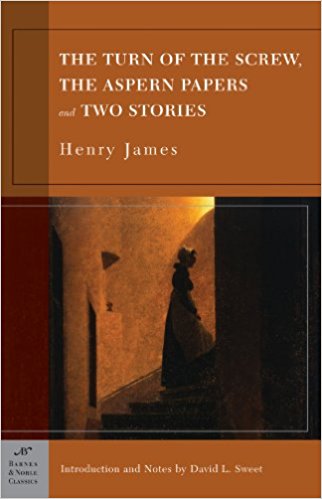
if you've played Layers of Fear...


...read The Turn of the Screw by Henry James


___________

if you've played The Nonary Games...


...read Secret, Doubt, and/or Judge by Yoshiki Tonogai


___________

if you've played Prey...


...read Sphere by Michael Crichton


___________

if you've played Resident Evil VII...


...read Heart of Darkness by Joseph Conrad


___________

if you've played Silent Hill (1)...


...read Shutter Island by Dennis Lehane


___________

if you've played Silent Hill 2...


...read I'm Thinking of Ending Things by Iain Reid


___________

if you've played Until Dawn...


...read Ancient Sorceries and Other Weird Stories by Algernon Blackwood


___________

if you've played The Vanishing of Ethan Carter...


...read Tales of Soldiers and Civilians: and Other Stories by Ambrose Bierce
(particularly the story The Occurrence at Owl Creek Bridge)


___________


What do you think of this list, friends? Have you experienced any of these pairings? Have any similar recommendations of your own to share? Let us know!


Tuesday, October 10, 2017

REVIEW: Alan Wake - Rick Burroughs


  • Year first released:  2010
  • ISBN of the edition I read:  9780765328434
  • Publisher of the edition I read:  Tom Doherty Associates
  • My rating (out of 5):  1.5


As much as I love horror video games, I haven't (yet) gotten around to the 2010 game Alan Wake. It's on my list to play - in fact, I've owned it for awhile now - I just haven't touched it yet. Weird, since it's gotten almost universally positive reviews.

This novelization of the game came out the same year. And, as I explained in my post Guilty Pleasures, I'm rather a sucker for video game novelizations.

That said, giving a review about a novelization has an interesting dilemma: if there is anything amiss with the plot, you can't actually blame the author - at least not quite as much as if the author had invented the story himself.

And, though I still haven't played the game to compare it to the book, I have to say: there is definitely something amiss with the plot. I'll give Burroughs the benefit of the doubt and not pin it on him, but it certainly impacts my feelings about the book, and so needs to be discussed.

First, to give you an idea of the premise:

Popular horror author Alan Wake and his wife, Alice, head to the tiny island town of Bright Falls, Washington for a three-week vacation. Almost as soon as they get there, things go mighty wrong and Alice ends up missing. Alan then spends the rest of the book hunting her down, grappling with some sort of clunky, manifest-darkness/evil/possessed/monster/something-or-others with downright annoying speech patterns. (Yes, they talk, unfortunately.)

This is a fine setup (except for the monster talk). The mystery effectively leaves you scratching your head until near the end of the book - a necessary trait for suspense. And the main twist near the end was fairly clever, though not quite as fleshed out as it needed to be, especially considering how complex everything is.

...actually, I think I said that too nicely.

To be more clear:

At some point, it's almost as though the writer (whether Burroughs or the game's writer, I can't say) seems to hit a wall and say, "That's enough explaining; you kind of just have to accept it from here on out."

Um...why?

This is flat laziness. If you, the creator, can't even explain the complexity, then most likely the pieces don't actually fit together that well. (Indeed, they don't in this book.)

Further, though I won't go into spoiler territory here, there's a big splash right at the very end which it seems we're expected to accept as "It simply has to be this way." Yet I could think of no plot reason that it really had to be this way. Could there really not have been a different ending? - I'm sure there could have been, if the writer had taken a bit more time to sort it out before throwing it at us.

This is all too bad, because the secret behind everything could have made for a much better story - in fact, I'm tempted to say it deserved a better story. 

Aside from these gripes about the plot, there are a couple other points that should be said:

The setting felt rather unfocused. Bright Falls was certainly a great place for this sort of situation to occur. Yet Burroughs really didn't quite give us enough of a feel for the island town to really put together the imagery and scenery for ourselves. Perhaps he assumed we would have already played the game (and, therefore, already have a mental image of the island)? - it's hard to say. Either way, the location and atmosphere of the book felt like a missed opportunity. 

Also, the movement from one scene into the next was often downright jarring. We'll have Alan falling asleep in a bed somewhere, then, in the very next paragraph, he's crashing his car into a tree. 

...wait - what? When did he get behind the wheel? Is this a dream? (Oh, and yes - lots of sections of the book are dreams, which made the overall picture quite confusing about which pieces we really needed to know/pay attention to for the sake of the actual mystery at hand. A huge rookie mistake, if ever there was one.)

It often felt like pieces of the narrative were simply missing - and not for any particular, plot-driven reason; the creator just didn't feel like including them, I guess.

Ultimately, Alan Wake delivers an intriguing mystery - albeit with a bad ending - but wrapped up in a disarrayed, difficult-to-follow package. I'll still play the game eventually, in hopes that the presentation is more sensible there. The book was just plain messy, though.


Monday, October 9, 2017

What Horror Is Really About


When you’re trying to discuss the horror genre with someone, you may discover that is has a unique problem which it shares with only one other genre*:

Smarmy McGee: What’s your favorite horror movie?
Me: Hmm…probably Let Me In.**
Smarmy McGee: Psh. Whatever. That’s not even scary at all.

Well…yeah. Actually I agree. It’s not that scary. But you didn’t ask me about the scariest horror movie - you asked me what my favorite horror movie is.***

It’s the same with books, of course: I already explained that I don’t think books are scary, but that the scariest book I’ve read is I’m Thinking of Ending Things by Iain Reid. But Ending Things is a far cry from the best horror/thriller book.****

You don't see this problem with, say, sci-fi or fantasy or literary fiction. Can you imagine telling someone that your favorite sci-fi series is Asimov's Foundation series, and then that person replying that those books aren't "roboty" enough? Or that The Fellowship of the Ring isn't really that fantastical? It's ludicrous, right?

And yet we find people very often judging horrors/thrillers based on how scary they are. Yes, of course the idea is that these books/movies unsettle us, but does it really mean they're somehow inferior if they aren't that scary or disturbing? Is scare factor the only thing that sets these genres apart from others?

Not really, no. Though horror media usually tries to unsettle, frighten, or disturb us, it also shows us things: the darkness and the light that we all wrestle with; how people react in the face of the worst possible scenarios; how we overcome our fears, our past, our demons, ourselves.

This is what good horror is all about. Scares and thrills are, actually, merely the byproduct of this.


What do you think about this, friends? What do you think makes a good horror book (or movie)?


*Comedy, if you’re wondering.
**This is true. It’s probably my favorite horror movie. And yes, I like it just a hair more than the European original, Let the Right One In (though I sometimes feel alone in thinking that way).
***If you’re curious what the scariest horror movie is, it’s probably The Babadook.
****Which, obviously, is Dracula. Does that even need to be explained? 😉


Saturday, October 7, 2017

REVIEW: Lockdown (Escape from Furnace 1) – Alexander Gordon Smith


  • Year first released:  2009
  • ISBN of the edition I read:  0312611935
  • Publisher of the edition I read:  Square Fish
  • My rating (out of 5):  2.5


I've always been a believer in "young adult" books not only being for teenagers. Of course the Hunger Games and Twilight series are highly popular with adults as much as teens (even though at least one of those really really shouldn't be - but I won't say which *cough, cough* Twilight *cough, cough*), and I would argue strongly that Paper Towns by John Green is just as applicable to adults as it is to the younger crowds it was theoretically aimed at.

Then I come across a book like Lockdown, and I remember that, actually, some books really are for one specific demographic. I can imagine my 14-year-old self enjoying Lockdown immensely. It has a gritty, action-packed, thrilling story in an imaginative, disturbing setting, and with a main character who is at least half a step deeper than the protagonist of many other teen thrillers. 

Really, Lockdown wasn't bad. It didn't do anything unforgivable. The mystery it builds and the curiosity it inspires are admirable. But its constant stream of - and overt reliance on - testosterone and adrenaline really drive the point home that Gordon Smith was unmistakably trying to appeal to just one particular group of people (12-17 year-old boys, give or take). 

Perhaps it is not fair of me to judge the book too harshly. It wasn't written for me - and so, if I don't like it, this doesn't actually say anything against the book as a whole, does it? We might say that I wasn't, per se, meant to like the book.

Here are the things I can say about it, with at least a little less bias:
  • The book does a good job of creating a sense of claustrophobia. Its prison setting - both in appearance and in the society that inhabits it - is strongly developed and suffocatingly small (in a good way). 
  • The overall story kept me interested throughout the book, but the twists and tropes it employs (who lives and dies, the pace at which the events unfold, etc.) were overly transparent. Though I still don't know what's lying at the heart of the mystery (this was only the first book in the series), the types of events were rather predictable. 
  • Gordon Smith's writing style was tense and atmospheric, but not particularly unique in any other way. Also, it suffered from as many run-on sentences as the worst of Suzanne Collins' books. (Seriously: why is it okay for young adult books to be littered with so many run-ons? How disappointing. No wonder people don't know how to use commas and semi-colons anymore.)
  • In theme, plot, and overall content, Lockdown bears a striking resemblance to the much-more popular Maze Runner series by James Dashner. That said, I'd happily suggest Lockdown before Maze Runner. Though Lockdown doesn't transcend its demographic (neither did Maze Runner), it at least fixes many of the egregious errors of Dashner's book.

All in all, I can maybe see myself picking up volume two at some point in the future, but I doubt I'll make it through all six volumes of the series. It's interesting, but not six-books interesting. (To be fair, I can't think of any story which is worth being six books long.)

If you're a 12-17 year old boy*, I'd wager you would enjoy this book quite a bit. If you're not that demographic, though, then...meh. If the premise really sounds interesting to you (or if, for some reason, you enjoyed The Maze Runner), then sure, give it a shot. It's a rather quick read, at least - you won't lose too much of your life to it. But I can think of several other books - even similarly-themed young adult books - that I'd recommend before Lockdown.


*My apologies; I don't mean to play a gender-roles card here. Let me instead say: If you're a 12-17 year-old reader who enjoys actiony, adrenaline-packed thrillers, I'd wager you would enjoy this book quite a bit.

Fair?


Thursday, October 5, 2017

REVIEW: I'm Thinking of Ending Things - Iain Reid


  • Year first released:  2016
  • ISBN of the edition I read:  9781501126949
  • Publisher of the edition I read: Gallery/Scout Press
  • My rating (out of 5):  3.5


There's at least one great thing I can say about I'm Thinking of Ending Things: though I explained in my last post that I don't generally find books to be scary, this book has come the closest of any book so far. The first half of the book is, at most, eerie and peculiar (and with a highly uncomfortable scene at right about the halfway point), but once things really pick up, the tension becomes downright miasmatic. I veritably flew through the last 60 pages or so, trying to figure out what the heck was going on - and, importantly - why it was going on. 

So the book has that, at least. 

It also has rather interesting dialogue - odd, but in an appropriate way. The two main characters are quirky and believable, and though presumably you or I would never find ourselves in one of these conversations, it made sense that these two talked like this. I found their ideas to be of particular interest, even the ones that I don't especially agree with.

What I'm not so wild about, though, is the ending/the big twist. 

I should say: this is the second time I've read the book, and the first was only about six months ago. Normally, if I reread a book at all, there's a much larger gap of time in between readings. The last page of Ending Things, though, included what was, basically, a suggestion that the book be read a second time. (It's worth pointing out that Reid accomplishes this without breaking the fourth wall - the suggestion cleverly fits into a bit of dialogue right at the end.) 

My impression of the book didn't change drastically between the two readings. I'd hoped to get a little more out of the ending the second time - maybe pick up on something important that I missed the first time, understand it better. But I have to admit, the ending still doesn't sit quite right with me.

No spoilers, of course, but I will say that the twist at the end is a twist I've come across before in other stories. Yes, I was still surprised going into it - I hadn't imagined Ending Things going in that direction - but once I got there, I realized I'd hoped for something more unique. I found a few more interesting little tidbits and foreshadowing in my second reading, but not really enough to completely justify the ending.

Does this ending really work? Does it actually explain all the weird details along the way? - after two readings, I still can't answer these questions definitively. It's hard to say whether this is my fault or Reid's fault.

I acknowledge that there could potentially be something about the big twist that I simply don't understand. But then again, I've read the book twice - paid close attention, mulled over it quite a bit, even read other people's theories online - and something still doesn't add up right for me. At this point, it's a safe assumption that it never will.

Which is too bad. I enjoyed Reid's writing style. I hope that, in future books, he'll be a bit more effective about tying everything up. It certainly wasn't a bad book, though, and it's basically worth it if for no reason other than that it's the most tense book I've read.


Wednesday, October 4, 2017

Are Horror Books Actually Scary?


It's an interesting question, actually. I mean, we assume they're meant to be scary. But do they succeed?

I've told you that I love horror.

What I haven't yet told you is that: no, in fact; I don't think horror books are scary. Further, I don't really think they can be scary - at least not in most ways.

Surprising, I know.

Luckily, scare factor is not what I enjoy about horror (if it were, October would be a very different month for me - in this blog, as well as in my general media consumption throughout the month).

But why is that? Why is it so difficult for a book to be scary?

Actually, that question already includes the answer: to me, a book can't be scary precisely because it's a book.

When I'm reading a book - no matter what book it is, what time it is, where I'm at, what's happening around me - my brain never fully gets past the fact that I'm sitting in a room, holding a book in my hands, reading black words on white paper. No matter what happens in the book, I am always acutely aware that it is happening... well, in a book.

Movies are all about the visual and auditory elements. You actually see the monster, the mutilated corpses, the shadows creeping along the wall. There are crashes and clatters and whispers and panted breaths and scratches on the window. Things can jump out at you, catch you off guard, literally show you the palpable fear.

A book, on the other hand, is a bunch of papers glued together and imprinted with letters and words.

Obviously books are incredible - hence this blog. If I had to pick between having access to one type of media for the rest of my life - books, movies, video games, or music - I would pick books in the blink of an eye. No questions, no regrets.

But that doesn't automatically mean they always accomplish what they mean to do - especially if what they mean to do is scare me.

That said, though, surely there are some things books can do to impart scares, right?

Well, I've never been so scared by a book that I suddenly dropped it or threw it across the room or made sure it was never behind a locked door with me. I've never jumped out of my seat, screamed out loud, or clutched on to my wife while reading a book.

But books can most certainly cause tension. They can make my heart beat faster and faster as I race through the pages, wondering what's going to happen, hoping things will work out. They can leave me in complete shock about by the events and twists and the pervading evil. They can cause me to feel repulsed, squeamish, horrified (at least in a sympathetic way), anxious, and glad that I'm not in the same situation as the protagonist.

Do these things add up to being scary, though? It's hard to say, I guess. But I've never felt especially frightened while reading.


I know this opinion may not be very common. So what do you think, friends? Do you find books to be scary? 


Tuesday, October 3, 2017

REVIEW: Zombie Apocalypse - Stephen Jones


  • Year first released:  2010
  • ISBN of the edition I read:  9780762440016
  • Publisher of the edition I read:  Running Press Book Publishers
  • My rating (out of 5):  2.5


To be clear, I definitely picked up Zombie Apocalypse as a guilty pleasure. No expectations to speak of - just some zombie fun. The first hundred or so pages had me a bit fooled, though, into thinking this could actually be better than I had suspected.

Turns out I got a little ahead of myself by thinking this, of course - but who's surprised?

Apocalypse is, technically, a book of short stories, all by different authors. However, the creator, Stephen Jones, did a surprisingly good job of making the stories connect. They all - or most of them, at least - work together to tell different angles of, essentially, the same story: a government project in London ignores the proper protocol and digs up a centuries-old graveyard, unleashing an evolved version of the Black Plague...

etc. etc. etc.

Most of the stories aren't expressed as straightforward narratives - instead we have government memorandums, research notes, email and Tweet exchanges, diary notes, etc. - a great presentation for this sort of overarching plot.

The first several stories interlace like puzzle pieces, setting the book off on a great, disturbing note. Settings are repeated, characters reappear, the unfolding is elaborate and precise.

If the entire book had kept up this momentum, it actually could have been one of the better zombie books about there.* It doesn't take long for Apocalypse to lose its way, though. Starting somewhere around the first Tweet-exchange story ("Tweets of the Dead" by Jay Russell), the focus of the book gets more shifty and less defined. (In fact, specifically, "Tweets of the Dead" is one of the least interesting and least well-written of the collection.) From there, the stories get to be more hit-and-miss.

There are several missed opportunities here and there throughout - many of the stories seem to allude to larger things to come...which don't (at least not in any sort of meaningful, worthwhile way).

I briefly mentioned the overall story - London, graveyard, plague, blah blah blah - but, unfortunately, this actually only describes the first three quarters of the book. Up to that point, it's entirely centered around the events of London. And then, inexplicably, we have a story in Australia ("Wasting Matilda"). Why? - because...well, it's hard to say. Perhaps Robert Hood didn't get the memo that the stories were supposed to connect? Not really sure.

In fact, from this point on, the stories erratically and disjointedly jump around the world, only finally returning to England for the final, anticlimactic, terrible final story/speech.

The first half of the book is actually generally fun and worthwhile - if you're comfortable setting it aside before things derail. Majorly derail. The graphic design of the book alone makes it worth spending at least a bit of time with, and at least the first few stories are genuinely interesting for the genre. I only wish Jones hadn't let the latter half of the book slip through the cracks so badly.


*Actually, I guess, this is still one of the best zombie books out there - but that says more about other zombie books on the market than it says about this one.