Showing posts with label lists. Show all posts

Wednesday, February 28, 2018

What's in a Name?


There’s really no denying that names have a lot of power. How many times have you picked up a book for no reason other than it had an interesting title? How many times has the name of a book actually impacted how you feel about the book as a whole? How many times has just hearing a powerful name inspired you?

Rather than discuss why this is, I’d actually rather just talk about a few of the best book titles out there, as well as what makes them so meaningful.

Tell me, friends: What are some of your favorite book titles? What makes them so interesting/powerful/meaningful to you?

So then, for a very short list of only a few of the best names I've encountered:

If Nobody Speaks of Remarkable Things by Jon McGregor
This is absolutely the most amazing name ever conceivable for a book. (Okay, maybe that’s a bit hyperbolic, but still…) Really, though: this is the very very most amazingest book title I’ve ever come across. I read the book once some years back, and remember feeling that the book itself didn't quite live up to how wonderful the title is. That said, though, I'd like to give the book another shot in the near future and see if my feelings on it have changed.

Extremely Loud and Incredibly Close by Jonathan Safron Foer
Not only is this one of the greatest book titles I've seen, it's also one of the greatest books I've read. I read it too long ago to be able to write up a fair review for you now (unless I read it again, which is likely), but trust me when I tell you: the book is extremely great and incredibly beautiful.

Till We Have Faces by C.S. Lewis
This is a great example of a book that I read largely because of the title. Sure, I'd already been a fan of C.S. Lewis before reading Faces. But reading the back cover, this book really didn't appeal to me that much - it truly was the title that sold me on it. What exactly the title means though - and where it appears in the text - makes it even more powerful. What a profound phrasing, which you'll only fully understand once you read the book. (And you definitely should read it.) (Oh, and though it's not a full review, you can read a couple of my thoughts on the book here, if you'd like.)

What We Talk About When We Talk About Love by Raymond Carver
I haven't even read this book (yet). I just think it's a truly fantastic title, which is practically a story on its own. Really, the implications of this one phrase are mind-bending. (When we talk about love, we're not really talking about love? - cosmic.) In fact, I'm not the only one who's noticed how great of a title this is - it's been blatantly repurposed at least twice so far that I know of: once by Haruki Murakami for his book What I Talk About When I Talk About Running, and then later by Rob Bell for his book What We Talk About When We Talk About God.

If You Feel Too Much by Jamie Tworkowski
First of all, if you're not familiar with the works of To Write Love On Her Arms, you should get familiar with them, because they're wonderful. Aside from this, If You Feel Too Much is a lovely name that perfectly addresses Tworkowski's audience and exemplifies the overall mood and heart of the book. I might even go so far as to say that, of all the books on this list, it's the most intimately connected to the content of the book itself - which is certainly to Tworkowski's credit.

(I see now that apparently I like book titles that start with "If..." I hadn't noticed before. Interesting...)


Now it's your turn!


Wednesday, October 11, 2017

If You’ve Played This Video Game, Read That Book (Horror Edition!)


In my post Are Horror Books Actually Scary? I explained how it is that movies have the potential to be scarier than books.

Of all forms of media, though, nothing beats video games when it comes to scares.

Sure, movies have all the same sights and sounds of video games (and, of course, often appear more realistic than games), but there's still an element missing in movies:

You sit in the theatre and watch a story unfold in front of you. Will the hero survive/escape/beat the bad guy/save the day? - sit there long enough, and you'll find out.

In a video game, though, you can't just sit there and find out.

It's up to you if the horror is overcome.

You're the one who must defeat the monster, solve the puzzles, escape the maze. Are you keeping an eye on your character's health? Your ammo? Can you solve this riddle? Run fast enough? Set up the traps in time? Find a place to hide?

Movies and books can't even come close to that sort of tension.

That said, if, like me, you enjoy games, I want to join the worlds of video games and literature for you:

So if you've played This game, read That book.


(Alphabetical by video game title)


if you've played Alice Madness Returns...


...read Neverwhere by Neil Gaiman


___________

if you've played Amnesia: The Dark Descent...


...read The Castle of Otranto by Horace Walpole


___________


if you've played Bloodborne...


...read Perdido Street Station by China Mieville


___________

if you've played Dead Space 3...


...read At the Mountains of Madness by H.P. Lovecraft


___________

if you've played Fatal Frame 2...


...read Kwaidan by Lafcadio Hearn


___________

if you've played Inside...


...read A Wrinkle in Time by Madeleine L'Engle


___________

if you've played The Last of Us...


...read World War Z by Max Brooks


___________

if you've played Layers of Fear...


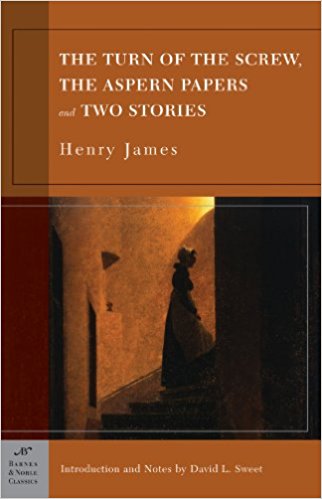
...read The Turn of the Screw by Henry James


___________

if you've played The Nonary Games...


...read Secret, Doubt, and/or Judge by Yoshiki Tonogai


___________

if you've played Prey...


...read Sphere by Michael Crichton


___________

if you've played Resident Evil VII...


...read Heart of Darkness by Joseph Conrad


___________

if you've played Silent Hill (1)...


...read Shutter Island by Dennis Lehane


___________

if you've played Silent Hill 2...


...read I'm Thinking of Ending Things by Iain Reid


___________

if you've played Until Dawn...


...read Ancient Sorceries and Other Weird Stories by Algernon Blackwood


___________

if you've played The Vanishing of Ethan Carter...


...read Tales of Soldiers and Civilians: and Other Stories by Ambrose Bierce
(particularly the story The Occurrence at Owl Creek Bridge)


___________


What do you think of this list, friends? Have you experienced any of these pairings? Have any similar recommendations of your own to share? Let us know!


Tuesday, September 26, 2017

Re-Reading Books


As much as I love literature – reading it, exploring it, getting lost in it, pondering it, picking it apart, writing it, writing about it, talking about it, collecting it, etc. – there’s one thing about me that might surprise you:

It’s actually pretty rare for me to re-read novels.

For sure it happens. There’s a list of books I’ve read more than once, and there’s another list of books I imagine I’ll read again at some point in the future. But I have to admit: both of those lists are much smaller than you might expect.

The novel I’ve read the most amount of times is Looking for Alaska by John Green (which I’ve read four times so far, and suspect highly that I’ll read again). There were various reasons I’ve read it each time, but it truly is a fantastic, 5-star book, without a doubt.

Then there are other books which I completely adored, about which I could rave almost endlessly, but which I’ve only read once and, frankly, will probably never read again.

Sometimes this is for practical reasons. I totally dug Jonathan Strange and Mr. Norell by Susana Clark. It was a highly enjoyable – and often very humorous – read, with incredibly intricate characters. But it’s about 1,100 pages long. I can read three new books in the time it would take to tread the same ground again. Why would I spend all that time reading something I already know?

Sometimes books put too much weight on the ending (such as I explained in my review of The Devotion of Suspect X). It’s not exactly like you can be surprised a second time, when you “find out” who the killer is (again). Once is enough.

Sometimes this is because I don’t want to ruin the impact of the book. The Crossing by Cormac McCarthy is my favorite novel so far this year (and one of only two 5-star ratings I’ve given so far this year). I worry, though, that it may not feel quite as majestic if I pick it up again. I’d rather not risk tarnishing my impression of it.

More than anything, though, I’m simply always hunting for new experiences. I don’t want to feel like I’m “going backwards.” Finishing a book tends to make me feel productive – a feeling which is highly important to me – and re-reading books just don’t leave me feeling that way, at least not as much.

I’ll tell you about a few books I’ve re-read, though. Especially considering how rare it is for me to re-read a book, I suppose that could mean that there’s something particularly special about these books. I’ll let you decide…
  • Looking for Alaska by John Green – Read four times, and will probably read again.
  • Dracula by Bram Stoker – Read three times, and will probably read again. (Possibly soon, in fact – it's been awhile since I last read it, and I’m starting to feel the itch…)
  • Bad Monkeys by Matt Ruff – Read twice; will probably NOT read again.
  • The Five People You Meet in Heaven by Mitch Albom – Can’t remember if I’ve read it two or three times; probably won’t read it again (but it’s more likely I’ll read this again than Bad Monkeys).
  • Asylum for Nightface – Read two or three times, and will almost inevitably read again.

A few books I’ve only read once so far, but I’m looking forward to reading again:
  • Frankenstein by Mary Shelley
  • This Census Taker by China Mieville
  • Genesis by Bernard Beckett
  • That Hideous Strength by C.S. Lewis
  • Momo by Michael Ende (which I really should read again, especially considering it's one of my very favorite books ever)

A few books I read once and especially liked (4+ rating), but will probably not read again:
  • The Crossing by Cormac McCarthy (5)
  • Blindness by Jose Saramago (4.5)
  • Jonathan Strange and Mr. Norell by Susana Clark (4.5)
  • The Prague Cemetery by Umberto Eco (4)
  • The Last Samurai by Helen Dewitt (4) (No, this is not at all related to the Tom Cruise movie, and yes, I was fully aware of that before I read it.)


What are your thoughts on this, friends? 
Do you have any books that fit into one of these categories? 
Are there any books that you’ve read countless times? 
Let us know!


Friday, September 1, 2017

Tsundoku (As Categorized by Italo Calvino)


It's an art, I think. Tsundoku, that is. It's the Japanese term for acquiring a large collection of books but not actually reading them. (Leave it to Japanese to have a word for everything. Just another way in which English is sorely lacking.)

I've gone through phases in my life when I've been good about this. And I've gone through phases when I've been bad about this. Of course, the real question is, which phase is which?

Italo Calvino explored this idea incredibly well in the first chapter of his book If on a winter's night a traveler (which you - yes you - should absolutely read if you haven't).

I'll let him take it from here:

In the shop window you have promptly identified the cover with the title you were looking for. Following this visual trail, you have forced your way through the shop past the thick barricade of Books You Haven't Read, which were frowning at you from the tables and shelves, trying to cow you. But you must never allow yourself to be awed, that among them there extend for acres and acres the Books You Needn't Read, the Books Made For Purposes Other Than Reading, Books Read Before You Even Open Them Since They Belong To The Category Of Books Read Before Being Written. And thus you pass the outer girdle of ramparts, but then you are attacked by the infantry of the Books That If You Had More Than One Life You Would Certainly Also Read But Unfortunately Your Days Are Numbered. With a rapid maneuver you bypass them and move into the phalanxes of the Books You Mean To Read But There Are Others You Must Read First, the Books Too Expensive Now And You'll Wait Till They're Remaindered, the Books ditto When They Come Out In Paperback, Books You Can Borrow From Somebody, Books That Everybody's Read So It's As If You Had Read Them, Too. Eluding these assaults, you came up beneath the towers of the fortress, where other troops are holding out: 
the Books You've Been Planning To Read For Ages,
the Books You've Been Hunting For Years Without Success,
the Books Dealing With Something You're Working On At The Moment,
the Books You Want To Own So They'll Be Handy Just In Case,
the Books You Could Put Aside Maybe To Read This Summer,
the Books You Need To Go With Other Books On Your Shelves,
the Books That Fill You With Sudden, Inexplicable Curiosity, Not Easily Justified
Now you have been able to reduce the countless embattled troops to an army that is, to be sure, very large but still calculable in a finite number; but this relative relief is then undermined by the ambush of the Books Read Long Ago Which It's Now Time To Reread and the Books You've Always Pretended To Have Read And Now It's Time To Sit Down And Really Read Them.  
With a zigzag dash you shake them off and leap straight into the citadel of the New Books Whose Authors Or Subjects Appeal To You. Even inside this stronghold you can make some breaches in the ranks of the defenders, dividing them into New Books By Authors Or On Subjects Not New (for you or in general) and New Books By Authors Or On Subjects Completely Unknown (at least to you), and defining the attraction they have for you on the basis of your desires and needs for the new and the not new (for the new you seek in the not new and the for the not new you seek in the new).
(No doubt you can see now why Italo Calvino stands in the highest echelon of authors, in my estimation.)

So let's be real, friends: Which of these categories of books do you still fall for? 

I think I have literally fallen for every single category in this list at least once, though I'm particularly weak against the attacks of Books That Fill You With Sudden, Inexplicable Curiosity, Not Easily Justified and Books You've Always Pretended To Have Read And Now It's Time To Sit Down And Really Read Them.


Monday, August 28, 2017

My Favorite Authors


In addition to highlighting for you all of my favorite books, it seemed worthwhile to spend a few moments on my favorite authors as well. Some of these, you’ll have guessed from my other posts, but certainly not all of them.

No biographies here, just a quick tidbit on what makes these people the best of the best.

Also no Shakespeare here, but that’s a story for another time.

Tell me, friends: Who are some of your favorites, and why?

(Alphabetical by last name)


Rob Bell
Best work: Velvet Elvis
Most known work: Love Wins

I don’t always agree with him, but he has a fantastic way of expressing his ideas. Much of my non-fiction writing is stylistically inspired by him.


Jorge Luis Borges
Best work: Labyrinths

Borges and Calvino are tied for the most influential authors on my own writing, particularly Borges’ short story Tlon, Uqbar, Orbis Tertius – seriously: I was completely blown away at the story and the structure of it.


Italo Calvino
Best work: Invisible Cities
Most known work: If on a Winter’s Night a Traveller

(As I just mentioned) Calvino is tied with Borges for being the most influential authors on my own writing. As a fun side note, I also own more books by Calvino than by any other author (and I only have about half of his books so far).


Joseph Campbell
Best work: the Power of Myth
Most known work: the Power of Myth or The Hero with a Thousand Faces

Admittedly it can be a bit difficult to get all the way through some of his books. He's incredibly insightful, though, and has made more connections between world cultures and religions than you or I ever could have on our own.


Umberto Eco
Best work: the Name of the Rose

An incredibly versatile author and thinker. Both his fiction and non-fiction are intricate and worthwhile.


Ralph Waldo Emerson
Best work: Self-Reliance, the Divinity School Address, Nature

The genius of all geniuses. And yes, my son was named after him.


Michael Ende
Best work: Momo
Most known work: the Neverending Story

For some reason, I'm drawn to Ende's writings more than I can explain. I've also worked long and hard to collect all of his books available in English. Time/money well spent.


Kahlil Gibran
Best work: the Prophet

I'm not really sure how to effectively sum up Gibran in a tidbit like this. His words and ideas simply stand alone in their beauty and virtue.


John Green
Best work: Paper Towns
Most known work: the Fault in Our Stars

This shouldn’t be too surprising, since he wrote my number one favorite modern fiction book. He’s that rare combo of deeply hilarious and wonderfully insightful.


Aldous Huxley
Best work: Huxley and God
Most known work: Brave New World

Huxley is probably the oddest member of this list: as a writer, I’m actually not generally too wild about his books. They always seem to include some elements that rub me the wrong way. But as a thinker, the man is pure genius. For this reason, I tend to prefer his non-fiction.


C.S. Lewis
Best work: Till We Have Faces
Most known work: tough to say for sure, but possibly the Lion, the Witch, and the Wardrobe or Mere Christianity

I’ve actually read more books by C.S. Lewis (14) than by any other author. What a brilliant, versatile person.


Cormac McCarthy
Best work: the Road
Most known work: All the Pretty Horses or the Road

The newest addition to this list. I’ve only read three of his books so far (The Road, All the Pretty Horses, The Crossing), but the man is a veritable gold mine of ideas and word play.


A.A. Milne
Best work: Winnie-the-Pooh

Milne holds a special place in my heart for being the author who really got me back into reading towards the end of high school, thanks largely to Winnie-the-Pooh. Also, his book Not that it Matters is sheer delight.


Jose Saramago
Best work: the Elephant’s Journey
Most known work: Blindness

Thanks to their sheer density, I can only read about one Saramago book a year - but those few hours out of the year are among the very best I spend reading.


Makoto Shinkai
Best work: 5 Centimeters Per Second
Most known work: Your Name

The only manga author on this list. He only has three manga so far, but every single one of them is absolutely stunning. If you're ever going to read even just one manga in your life, it should be one of his.


Zoran Zivkovic
Best work: Steps Through the Mist
Most known work: no clue - he's not too well known

A somewhat obscure Serbian sci-fi/fantasy author who crafts some of the most clever stories I’ve ever read. 


My Favorite Books


It seems appropriate to begin by spending a few minutes on some of my very favorite books.

Necessarily, this list is broken down into categories. People often talk about their favorite books, but whenever someone can identify one singular book as their “most” favorite, I am always suspicious.

I am able to compare a modern, literary fiction book against another. But how do I compare something like Cormac McCarthy’s The Road (a sparse, dreary, post-apocalyptic journey novel) to, say, Winnie-the-Pooh (a light-hearted, adorable children’s fantasy)? Is one of these definitively better than the other? – not that I can see. They’re completely incomparable. “Apples and oranges” and all that.

That said, I’ve broken this down into five categories:

  • Modern Fiction (basically, anything fictitious from approximately the 1950’s or so onward)
  • Non-Modern Fiction (what we call “classics” fit here, as well as any book that’s older than roughly the 50’s).
  • Children’s Books (note that Young Adult books do NOT go here—those go in “Modern Fiction”)
  • Narrative Non-Fiction (true stories, such as memoirs and biographies; the narration of certain events or time periods, etc.)
  • Non-Narrative Non-Fiction (books that aren’t really meant to be stories, such as essays, spirituality, etc.)

Of course any one of these can be subdivided in a thousand other ways; I’m mostly looking at broad strokes here.

Also, please keep in mind:

This list does NOT go into the “most influential books ever” or anything of the sort. It strictly sticks to the books I enjoy the most. For example: yes, I know that Homer’s Odyssey is absolutely indispensable to literature as we know it. I don’t contest this fact at all. Surely it is one of the most important books we have. I don’t really enjoy it, though—ergo, you won’t see it on this list.

And, finally, I've included links for all of the books to where you can buy them from BarnesandNoble.com - that way you can partake of the same joy in them as I have. :)

Tell me, friends: What are some of your favorites, and why?

So then. Here we go…


Modern Fiction


1. Paper Towns by John Green
2. Extremely Loud and Incredibly Close by Jonathan Safron Foer
3. Labyrinths by Jorge Luis Borges
4. The Road by Cormac McCarthy
5. Looking for Alaska by John Green
6. Till We Have Faces by C.S. Lewis
7. The Giver by Lois Lowry
8. Asylum for Nightface by Bruce Brooks
9. Invisible Cities by Italo Calvino
10. Thirteen Reasons Why by Jay Asher


Non-Modern Fiction


1. The Hunchback of Notre Dame by Victor Hugo
2. The Picture of Dorian Gray by Oscar Wilde
3. Dracula by Bram Stoker*
4. Frankenstein by Mary Shelley*
5. Hamlet by William Shakespeare
6. The Strange Case of Dr. Jekyll and Mr. Hyde by Robert Louis Stevenson*

*(If you'd like to pick up all three of these in one cheap, fell swoop, Signet made that really easy for you here.)


Children’s Books


1. Momo by Michael Ende
2. Winnie-the-Pooh by A.A. Milne
3. The House at Pooh Corner by A.A. Milne
4. A Monster Calls by Patrick Ness
5. Alice’s Adventures in Wonderland by Lewis Carroll
6. Through the Looking Glass by Lewis Carroll
7. The Little Prince by Antoine de St. Exupery
8. Where the Wild Things Are by Maurice Sendak


Narrative Non-Fiction


1. The Prophet by Kahlil Gibran
2. The Bhagavad Gita (I mostly read the Prabhavananda/Isherwood translation)
3. Tuesdays with Morrie by Mitch Albom
4. Man’s Search for Meaning by Viktor Frankl
5. Seven Years in Tibet by Heinrich Harrer


Non-Narrative Non-Fiction


1. the writings of Ralph Waldo Emerson*
2. Tao Te Ching by Lao Tzu (I mostly read the Charles Muller translation)*
3. Velvet Elvis by Rob Bell
4. Blue Like Jazz by Donald Miller
5. Notes to Myself by Hugh Prather

*(Considering that these two books are #’s 1 and 2 on this list, The Tao of Emerson – compiled by Richard Grossman – is an absolute gem of a book, though it should not be considered a replacement for the two books themselves.)