Wednesday, October 18, 2017

On Koji Suzuki's Ring Hexalogy


Remember Gore Verbinski’s 2002 horror movie The Ring (starring Naomi Watts)?

Well I don’t, because I fell asleep halfway through. 

Luckily, though, this remake of the 1998 Japanese movie Ringu at least introduced us in the West to what is actually a great series of Japanese horror stories. (In fact, we can basically thank Verbinski for starting the Japanese horror craze on our shores altogether.) 

Before even the Japanese film Ringu, though, was the 1991 Koji Suzuki novel of the same name. The book was immensely popular (rightly so) and spawned what is - at least so far - a hexalogy of books:

Ring
Spiral
Loop 
Birthday (a collection of three novellas)
S*
Tide*

(As S and Tide have not yet been translated into English, I haven't read/can't discuss them. But S is finally getting its US release in just a couple months!)

If you've seen any of the movies in the series - whether any of the five Japanese movies or four American - you're probably at least mildly familiar with the overall trope:

A mysterious video tape appears, filled with eerie, disturbing images. At the end of the tape is a message - something to the effect of "You will die in seven days, if you don't..." But of course the end of the tape cuts off, and you don't really know what you're supposed to do to avoid being murdered. Well shucks.

Oddly, this is more or less the basic premise of all of the movies...and yet only the first novel. 

Much like the movie sequels, I had expected the second book, Spiral, to continue on the mystery of the killer video tape. And yet, to my pleasant (if morbid) surprise, Spiral ended up taking the story in a wildly different direction. Weird that the movies (and even the five-part manga series, which I haven't yet mentioned) all basically ignored the overall story from this point onward.

Ring is a stylish, incredibly inventive psychological horror. (See The Four Main Types of Horror for a reminder, if you need.) It features the dreadful mood and tension so predominant in the genre, and a terrifying mystery that unravels like a slow poison - contrasting wonderfully with the protagonist's veritable race against the clock. (And, by the way, if you haven't seen the movies nor had the ending ruined for you, the book really is highly clever and surprising.) 

Spiral, though, gives us half a psychological horror, but smoothly moves the book into more of a body horror. Clever transition, that. Instead of the book being all about a mysterious, deadly, supernatural object, we now have a scientific/medical approach to the entire ordeal. 

Equally clever is how the third book, Loop, takes the body horror of Spiral, then moves the series in the direction of sci-fi. Here, many of the scarier elements of the series are lost, but replaced with what is a truly mind-blowing coup d'etat compared to everything else in the series. 

(And, lest I forget: Birthday mostly goes back to the psychological brand of horror, which makes sense, considering that two of the three novellas in it are prequels to Ring.)

It's a smooth trick that Suzuki plays on us throughout the series, morphing the genre each step of the way.

More than even this unique genre-shift, though, is the way Suzuki plays with everything we think we know about the universe of Ring:

Most stories give us at least some sort of a resolve by the end. Even if it's not entirely complete, we generally have a good idea of the how and the why behind everything. 

Indeed, Ring basically unravels the history and secrets of the video tape by its final page, much as you'd expect would happen. And yet only a fraction of the way into Spiral, I found myself a bit dumbfounded, asking, "Wait - that's what's actually going on here?" What we discover in Spiral completely subverts what we learned in Ring.

It was a fantastic trick which I, at least, didn't see coming. 

Perhaps even more fantastic is that, by the end of Spiral, we realize what's really going on...but only until halfway through Loop, when we are doubly dumbfounded and doubly shocked to find out what's actually, really, for-reals-this-time going on. 

People often use the phrase "tour de force" when describing a book. I don't generally like the expression in this sense (one, because it's become highly overused, and two, because most books really aren't actually "tour de forces"), but I can think of no more appropriate book/series that has earned the label. 

The way the series evolves from Ring through Spiral and into Loop - in both the shifting genres, as well as the genius plot evolution - is nothing short of mind-bending. Give it a go.


Tuesday, October 17, 2017

Asian Horror v. American Horror


Really, this topic could easily be a book. And I don’t think I’m qualified to write that book. Despite this, there are plenty of observations I’ve made along the way – and things that make me tend to enjoy Asian Horror more than American – so there’s clearly something there worth discussing.

And, I hope it goes without saying that I’m speaking in broad strokes here – of course there are exceptions to the ideas I’m about to discuss. I’m sure there are plenty of Asian authors/film directors/video game designers who create their medium in a more “American” way, so to speak, and vice versa.

Aside from these exceptions, though, I tend to prefer horror media that comes out of Asia (especially Japan) more than that which comes from our own shores. Why is this? 

The easiest way to answer this question is to begin with my earlier post The Four (Main) Types of Horror. The last of the four sub-genres that I discussed there - and the one I identified as being my favorite - is Psychological Horror

That said, the most direct way I can explain why I enjoy Asian Horror more than American is to say this: 

Asian Horror tends to be more psychological than American. 

It's really as simple as that. 

If you think about the horror/thriller media that is produced in the U.S., you often see tales of gratuitous serial killers; violent monsters; evil, megalithic corporations; etc. We have Stephen King, the Hannibal Lecter series, and the Saw movies. 

To sum it all up - admittedly in a very general way - we tend to produce highly violent clashes of external, opposing forces, which are most often solved by the use of power. In a word, our horror is often

BIG 

Of course all of this has its place. Sometimes, this sort of media is exactly what I'm looking for. Though the Resident Evil movies don't contain a fraction of the quality of their video game counterparts (their Asian-made video game counterparts, I should add), dang it if I don't have a blast watching them anyway. (Guilty pleasures, for sure.)

Asian horror, though, tends to focus much less on these bombastic power plays and more on the psyches of its key players. Gone are the enormous explosions, set pieces, and over-the-top violence, all replaced by the tiniest details that add up to an overwhelming sense of dread. In a word, Asian horror is often very 

small

- in all the right ways, though.

Rather than Asian horror focusing on an archetypal hero (or group of heroes), we are usually given an everyday person who must wrestle with his or her own demons just as much as - in fact, usually more than - whatever dark force is at the center of the plot. Of course seeing Bruce Willis kick @$$ is fun, but there's something much more psychologically, intrinsically gratifying in seeing someone overcome their fears and their past and their inner darkness.

We might even say that American horror tends to be like a huge painting, full of color and gunfire and monsters, which we can absorb all at once. Even before finishing it, we can already see that the hero(es) will overcome The Evil - which is always Someone/Something Else.

Contrasted to this, Asian horror tends to be more of a puzzle, the gray-shaded pieces of which we're only handed one at a time, each of which ratchets up the tension more and more all the way up through the end, when we ultimately realize that this was never a painting, nor a Something Else - it was always a mirror. 


Sunday, October 15, 2017

REVIEW: Frankenstein - Mary Shelley


  • Year first released:  1818
  • ISBN of the edition I read: 
  • Publisher of the edition I read:  Signet Classic
  • My rating (out of 5):  5


Frankenstein's nameless monster, pleading with us, 
wondering how we've come to misunderstand the original story so badly.


Now that I’ve read both The Strange Case of Dr. Jekyll and Mr. Hyde and Frankenstein in close proximity to another, I realize that each suffers from the opposite problem of the other. As I explained in my review of Jekyll and Hyde,
[W]hat most people consider to be the heart of the story is actually left a complete mystery from the reader until over two-thirds of the way into the book. Nowadays, you go into the book knowing precisely what Dr. Jekyll is up to, when his actions are intended to be shrouded in a deep, eerie mystery - and, in fact, are meant to be the ultimate twist of the book.

In other words, most people nowadays already know the biggest secret/climax of the book before they even pick it up.

Frankenstein suffers from the obverse of this: what you think is the climax actually happens only a quarter of the way into the book.

Most modern adaptions of Frankenstein present us with the long-bearing struggle of Dr. Frankenstein as he tries, fails, tries again to create a monster – all the while growing insane, digging up graves, and being hounded by suspicious villagers/police officers – until, finally, just in time for the perfect thunder storm, he is able to accomplish the feat with a suspiciously timed lightning bolt striking his lab. “It’s alive! It’s ALIVE!”

And then he says, “Oops,” and the monster kills him. Or something like that.

…yeah, except none of that happens in the original. Like…none of that. No, really: none.

The edition I read of the book was 223 pages long. In it, Dr. Frankenstein succeeds at creating the monster on page 55. And neither before nor after this feat are we given scenes of police dodging, corpse desecrating, villagers mobbing, or storms lightninging. (Yes, I know that's not a word, but you get the point.)

Oh, and there's no hunchbacked assistant named Igor. Nor just a hunchback. Nor just an assistant. Nor just an Igor. But that's neither here nor there.

Weird how things evolve like this.

In fact, as you might suspect from everything I’ve explained so far, the actual creation of the monster is a far cry from the real heart of the book. Rather, the weight of the plot rests on what happens to the monster – and to its creator Dr. Frankenstein – after the monster is made (and immediately escapes). And it’s in this tale where the book truly shines, whilst simultaneously frightening us.

The fact that Dr. Frankenstein is able to create life out of non-life is certainly interesting, but not necessarily frightening on its own. What becomes of his new breed of life, though...

Well.

It’s one thing for a book to show us the inner workings – and, by extension, the inner depravity – of man. This is, for example, what Jekyll and Hyde excelled at so fantastically. In Frankenstein, though, Shelley creates for us a monster made in the image of man, but which is not a man – and, in so doing, creates for us a powerful exploration of many of the other ways in which depravity can take shape, while also serving as a perfect parallel to man himself, in his glory and gluttony. 

The monster's arc is a clear highlight of the book. Yes, the monster is certainly criminal, but his rise and fall - his misunderstandings about how the world works, the complete lack of compassion and empathy he is shown at every turn - make us wonder who is really at fault here. In fact, as Frankenstein himself wonders aloud time and again, we are forced to ask how deep the fault actually lies on him. What line has he crossed? Are the blood of the monster’s victims actually on Frankenstein’s hands? Is it ever okay to play god like this?

Taking the novel to be a look at both blind ambition and moral ambiguity, it would be harder to find a more fitting tale – which is, no doubt, what continues to make it such a powerful, lasting book 199 years after it was first published. 


Thursday, October 12, 2017

REVIEW: Witches! The Absolutely True Tale of Disaster in Salem - Rosalyn Schanzer


  • Year first released:  2011
  • ISBN of the edition I read: 
  • Publisher of the edition I read:  National Geographic Society
  • My rating (out of 5):  4


Despite what we may sometimes hope, not all horror belongs to the realm of fiction. The bookstore is rife with true crime books, some representing cases which have been definitely solved, others which to this day remain unsolved (and, unfortunately, some which may forever remain unsolved). Yes, there are plenty of twisted individuals in our world and our history – about whom fascinating, disturbing stories can be told – but sometimes the scariest events don’t revolve around individual people so much as cultures and ideas that, scarily, become the norm. Nazi Germany can certainly be an example of this. And, as Schanzer points out with her book Witches!, so, too, can the Salem Witch Trials.

If the very essence of the “trials” weren’t horrifying enough – which they certainly are, you’ll realize only a couple pages into Schanzer’s book – Witches! also contains a selection of eerie, even disturbing woodblock prints (done by Schanzer herself) which masterfully represent the terrifying ideas that ran rampant through Salem in the early 1690’s. Considering their gruesome imagery, I don't think "beautiful" is quite the right word for them - they're certainly fantastically done, though.

If you’re unfamiliar with anything regarding the “trials” (except for the fact that they existed), Schanzer’s book is certainly a great intro to the subject. She does an excellent job at displaying the moods and culture that surrounded the horrifying events that lead to the torture and executions of dozens of people – women mostly, but also a few men – through the spring and summer of 1692.

It’s also worth pointing out: the subtitle of the book, The Absolutely True Tale of Disaster in Salem, is highly apt. Unlike many other writings on the subject, Schanzer does not present us with loads of conjecture (there is some bits in there, yes, but she is always very careful to point out what is fact versus what is inference). There is no imagined dialogue in the book, no guessing at what any given individual may have been thinking at one point or another throughout the happenings. Witches! truly deserves the moniker of “Absolutely True.”

All of this leads into my one half-complaint about Witches! though, which, I freely admit, must be presented with a grain of salt:

I was careful to say that this is a “great intro” to the subject for a reason. Witches! really is only an introduction to the subject matter. Though there’s good information in the book – and it is expounded very well – it ultimately only scratches the surface of that fateful year. The story which Schanzer weaves for us is really quite simple.

Then again, Witches! is targeted for 10-13 year-olds, which is, for better or worse, precisely what it feels like. This simplicity is probably just about right for that age range. The writing style, too, was certainly meant for the pre-teen crowd.

I can’t, per se, hold this simplicity and writing style against the book, of course. It wasn’t written for me. It was written for kids 20 years younger than me. Trying to look at it from that perspective, I imagine these complaints are probably a wash. Would a pre-teen think this book has lots of good information? – likely, yes. (Also, note that I tried to give the book a numerical rating taking into consideration this viewpoint.)

I bring up these complaints, though, to point out two things:

First, I’m jealous these wondrous woodblocks are to be found in a children’s book, rather than in an “adult” book on the matter. Clearly we need to have more illustrated "adult" books.

Second, I’m actually a big fan of children’s books, many of which seem to transcend ages and become tales in which anyone and everyone can find joy and inspiration. Unlike such timeless children’s books, though, Witches! has an “upper age limit,” so to speak.

If you’re looking for recommendations on good horror books, I would say that Witches! has the potential to be one of them. It’s a deeply troubling story presented in a wondrously eerie package. And, unlike most other horror you’re likely to encounter this Halloween season, Witches! has the added bonus of being both educational and Absolutely True. I would almost say that these things alone make it worth adding to your reading list – merely keep in mind that you may find the depth of information and the writing style a bit beneath your age (depending on how old you are).


Wednesday, October 11, 2017

If You’ve Played This Video Game, Read That Book (Horror Edition!)


In my post Are Horror Books Actually Scary? I explained how it is that movies have the potential to be scarier than books.

Of all forms of media, though, nothing beats video games when it comes to scares.

Sure, movies have all the same sights and sounds of video games (and, of course, often appear more realistic than games), but there's still an element missing in movies:

You sit in the theatre and watch a story unfold in front of you. Will the hero survive/escape/beat the bad guy/save the day? - sit there long enough, and you'll find out.

In a video game, though, you can't just sit there and find out.

It's up to you if the horror is overcome.

You're the one who must defeat the monster, solve the puzzles, escape the maze. Are you keeping an eye on your character's health? Your ammo? Can you solve this riddle? Run fast enough? Set up the traps in time? Find a place to hide?

Movies and books can't even come close to that sort of tension.

That said, if, like me, you enjoy games, I want to join the worlds of video games and literature for you:

So if you've played This game, read That book.


(Alphabetical by video game title)


if you've played Alice Madness Returns...


...read Neverwhere by Neil Gaiman


___________

if you've played Amnesia: The Dark Descent...


...read The Castle of Otranto by Horace Walpole


___________


if you've played Bloodborne...


...read Perdido Street Station by China Mieville


___________

if you've played Dead Space 3...


...read At the Mountains of Madness by H.P. Lovecraft


___________

if you've played Fatal Frame 2...


...read Kwaidan by Lafcadio Hearn


___________

if you've played Inside...


...read A Wrinkle in Time by Madeleine L'Engle


___________

if you've played The Last of Us...


...read World War Z by Max Brooks


___________

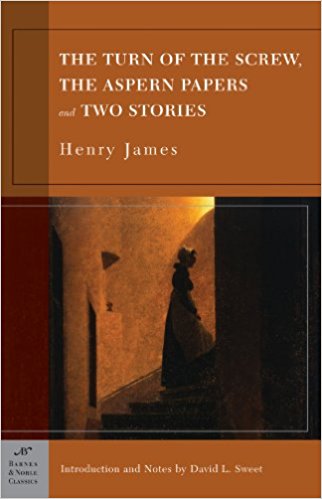
if you've played Layers of Fear...


...read The Turn of the Screw by Henry James


___________

if you've played The Nonary Games...


...read Secret, Doubt, and/or Judge by Yoshiki Tonogai


___________

if you've played Prey...


...read Sphere by Michael Crichton


___________

if you've played Resident Evil VII...


...read Heart of Darkness by Joseph Conrad


___________

if you've played Silent Hill (1)...


...read Shutter Island by Dennis Lehane


___________

if you've played Silent Hill 2...


...read I'm Thinking of Ending Things by Iain Reid


___________

if you've played Until Dawn...


...read Ancient Sorceries and Other Weird Stories by Algernon Blackwood


___________

if you've played The Vanishing of Ethan Carter...


...read Tales of Soldiers and Civilians: and Other Stories by Ambrose Bierce
(particularly the story The Occurrence at Owl Creek Bridge)


___________


What do you think of this list, friends? Have you experienced any of these pairings? Have any similar recommendations of your own to share? Let us know!


Tuesday, October 10, 2017

REVIEW: Alan Wake - Rick Burroughs


  • Year first released:  2010
  • ISBN of the edition I read:  9780765328434
  • Publisher of the edition I read:  Tom Doherty Associates
  • My rating (out of 5):  1.5


As much as I love horror video games, I haven't (yet) gotten around to the 2010 game Alan Wake. It's on my list to play - in fact, I've owned it for awhile now - I just haven't touched it yet. Weird, since it's gotten almost universally positive reviews.

This novelization of the game came out the same year. And, as I explained in my post Guilty Pleasures, I'm rather a sucker for video game novelizations.

That said, giving a review about a novelization has an interesting dilemma: if there is anything amiss with the plot, you can't actually blame the author - at least not quite as much as if the author had invented the story himself.

And, though I still haven't played the game to compare it to the book, I have to say: there is definitely something amiss with the plot. I'll give Burroughs the benefit of the doubt and not pin it on him, but it certainly impacts my feelings about the book, and so needs to be discussed.

First, to give you an idea of the premise:

Popular horror author Alan Wake and his wife, Alice, head to the tiny island town of Bright Falls, Washington for a three-week vacation. Almost as soon as they get there, things go mighty wrong and Alice ends up missing. Alan then spends the rest of the book hunting her down, grappling with some sort of clunky, manifest-darkness/evil/possessed/monster/something-or-others with downright annoying speech patterns. (Yes, they talk, unfortunately.)

This is a fine setup (except for the monster talk). The mystery effectively leaves you scratching your head until near the end of the book - a necessary trait for suspense. And the main twist near the end was fairly clever, though not quite as fleshed out as it needed to be, especially considering how complex everything is.

...actually, I think I said that too nicely.

To be more clear:

At some point, it's almost as though the writer (whether Burroughs or the game's writer, I can't say) seems to hit a wall and say, "That's enough explaining; you kind of just have to accept it from here on out."

Um...why?

This is flat laziness. If you, the creator, can't even explain the complexity, then most likely the pieces don't actually fit together that well. (Indeed, they don't in this book.)

Further, though I won't go into spoiler territory here, there's a big splash right at the very end which it seems we're expected to accept as "It simply has to be this way." Yet I could think of no plot reason that it really had to be this way. Could there really not have been a different ending? - I'm sure there could have been, if the writer had taken a bit more time to sort it out before throwing it at us.

This is all too bad, because the secret behind everything could have made for a much better story - in fact, I'm tempted to say it deserved a better story. 

Aside from these gripes about the plot, there are a couple other points that should be said:

The setting felt rather unfocused. Bright Falls was certainly a great place for this sort of situation to occur. Yet Burroughs really didn't quite give us enough of a feel for the island town to really put together the imagery and scenery for ourselves. Perhaps he assumed we would have already played the game (and, therefore, already have a mental image of the island)? - it's hard to say. Either way, the location and atmosphere of the book felt like a missed opportunity. 

Also, the movement from one scene into the next was often downright jarring. We'll have Alan falling asleep in a bed somewhere, then, in the very next paragraph, he's crashing his car into a tree. 

...wait - what? When did he get behind the wheel? Is this a dream? (Oh, and yes - lots of sections of the book are dreams, which made the overall picture quite confusing about which pieces we really needed to know/pay attention to for the sake of the actual mystery at hand. A huge rookie mistake, if ever there was one.)

It often felt like pieces of the narrative were simply missing - and not for any particular, plot-driven reason; the creator just didn't feel like including them, I guess.

Ultimately, Alan Wake delivers an intriguing mystery - albeit with a bad ending - but wrapped up in a disarrayed, difficult-to-follow package. I'll still play the game eventually, in hopes that the presentation is more sensible there. The book was just plain messy, though.


Monday, October 9, 2017

What Horror Is Really About


When you’re trying to discuss the horror genre with someone, you may discover that is has a unique problem which it shares with only one other genre*:

Smarmy McGee: What’s your favorite horror movie?
Me: Hmm…probably Let Me In.**
Smarmy McGee: Psh. Whatever. That’s not even scary at all.

Well…yeah. Actually I agree. It’s not that scary. But you didn’t ask me about the scariest horror movie - you asked me what my favorite horror movie is.***

It’s the same with books, of course: I already explained that I don’t think books are scary, but that the scariest book I’ve read is I’m Thinking of Ending Things by Iain Reid. But Ending Things is a far cry from the best horror/thriller book.****

You don't see this problem with, say, sci-fi or fantasy or literary fiction. Can you imagine telling someone that your favorite sci-fi series is Asimov's Foundation series, and then that person replying that those books aren't "roboty" enough? Or that The Fellowship of the Ring isn't really that fantastical? It's ludicrous, right?

And yet we find people very often judging horrors/thrillers based on how scary they are. Yes, of course the idea is that these books/movies unsettle us, but does it really mean they're somehow inferior if they aren't that scary or disturbing? Is scare factor the only thing that sets these genres apart from others?

Not really, no. Though horror media usually tries to unsettle, frighten, or disturb us, it also shows us things: the darkness and the light that we all wrestle with; how people react in the face of the worst possible scenarios; how we overcome our fears, our past, our demons, ourselves.

This is what good horror is all about. Scares and thrills are, actually, merely the byproduct of this.


What do you think about this, friends? What do you think makes a good horror book (or movie)?


*Comedy, if you’re wondering.
**This is true. It’s probably my favorite horror movie. And yes, I like it just a hair more than the European original, Let the Right One In (though I sometimes feel alone in thinking that way).
***If you’re curious what the scariest horror movie is, it’s probably The Babadook.
****Which, obviously, is Dracula. Does that even need to be explained? 😉